
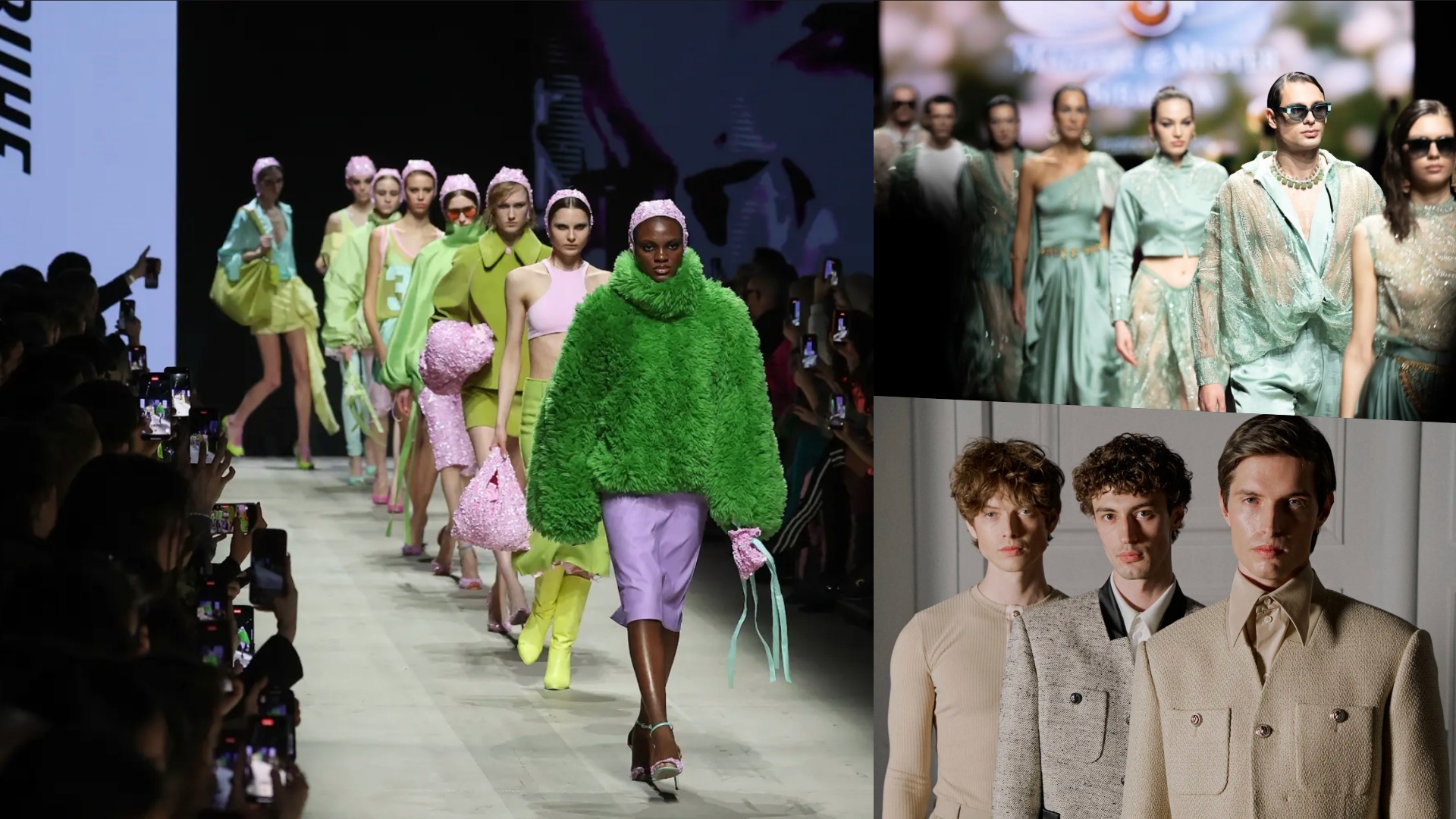
There are fashion weeks you attend, and then there are fashion weeks you feel from a distance — through images, movement, and the quiet hum of an industry still turning without you physically in the room.
This season, Moscow Fashion Week unfolded inside the historic ‘Manege’ from March 14 to 19, drawing over 65,000 visitors across six days. While we were not present on ground this time — something we genuinely missed — the scale, energy, and creative force of the event still travelled far enough to be felt. The city, as always, became a stage where fashion wasn’t just shown, but built, debated, and reimagined.

Across more than 80 runway shows, nearly 300 designers from 21 Russian regions and four countries — China, Turkey, Spain, and Armenia — came together in a shared language that needed no translation. Over 1,500 models presented more than 2,500 looks, each show adding to a larger conversation about where fashion is headed next.

What stood out this season was not just the volume, but the intent. Moscow Fashion Week continues to position itself as more than a showcase — it is an infrastructure for growth. Emerging designers stood alongside established names, turning the runway into a meeting point between ambition and legacy.
As designer Oleg Ovsiyov of Viva Vox (Moscow) noted, the platform has become a crucial support system for local talent, offering visibility and legitimacy in an increasingly competitive global landscape. Meanwhile, Evgenia Linovich of Masterpeace (Moscow) highlighted the creative urgency the week brings — a deadline, a push, and a space where ideas are forced into form.

This season’s collections reflected a world in conversation with itself. Cultural codes, mythology, and philosophy ran parallel with technological speculation and future-facing design. Russian heritage motifs merged with cyberpunk silhouettes; marine references softened into eveningwear; retro-futurism met clean modern minimalism. The result was less about a single trend, and more about multiple identities existing in the same visual frame.
Beyond the runway, the week extended into experience. A curated pop-up and showroom featured 88 brands, bringing fashion closer to commerce and immediacy. Meanwhile, the Lecture Hall hosted 33 discussions with some of the industry’s most recognisable voices — from stylists and TV personalities to producers and digital creators — unpacking everything from cultural narratives to the future of fashion itself.
The World Fashion Shorts film festival added another layer, screening works from Russia, Brazil, Mexico, the Philippines, and beyond. Fashion here was not confined to clothing alone, but expanded into storytelling, cinema, and dialogue — reminding audiences that style is increasingly a cross-disciplinary language.
Watching from afar this season brought a different kind of clarity. Not being in the room shifts the perspective — you begin to see fashion weeks not only as events, but as ecosystems that continue to evolve whether you are physically present or not. Still, there is an undeniable feeling of absence when you’ve once been part of that movement, that rhythm, that front-row immediacy.

And perhaps that is what Moscow Fashion Week does best — it reminds you that fashion is never static. It travels, it translates, and even when you are not there, it still finds a way to reach you.
We may not have walked those halls this time, but from afar, Moscow still felt like Moscow — unapologetically expansive, creatively restless, and firmly in motion.
